Review Essay
I think of all the possible genres for a Christmas movie, a war movie in some respects seems least viable. Christmas is a holiday that generally provokes Western society to a rare moment of pacifism, whether it’s John and Yoko singing “Happy Xmas (War is Over)” or Stevie Wonder singing the (to me) far superior “Someday at Christmas” or a choir singing the words of Longfellow’s lament in “I Heard the Bells on Christmas Day”. And so, of course, the best holiday war movie I know presents a story about an unlikely truce, and what it tells us about both Christmas and ourselves.
The premise of Joyeux Noel (or, Merry Christmas, if we want to translate the title) takes us to a particular historical moment: Christmas, 1914, the first of these holidays to be observed in a war that was allegedly planned to be over by then, and which would of course extend over several more bloody years. We follow the pathways to war of soldiers from three countries — a German tenor opera singer named Sprink, a Frenchman who is son of a major general named Audebert, a pair of Scottish brothers (Jonathan and William) and their parish priest, Father Palmer, and a handful more — as war is declared. We watch an intense and violent sequence of trench warfare, as one of the Scotsmen (William) falls dead in no man’s land next to his weeping brother. And then it’s Christmas Eve, and something wondrous happens.

The film’s opening, just to clarify, isn’t just about establishing characters — it’s about the cruelty of war, in which everyone is participating. The film’s very first scene is an intense, almost nightmarish sequence in which we hear one child after another reciting angry, violent propaganda, first in French, then in English, then in German. Fear and hatred is inculcated from the youngest possible age. We have seen angry old men on every side, too: a bitter old Frenchman whose home is occupied and who clearly thinks of the Germans as barely human. A furious Scottish officer who wants to bark the compassion out of every last soldier in his unit since he’s convinced it’ll get them killed. A series of German officers (and a crown prince) for whom the violence of this war is remote and tactical, a string of words on a page but not a reality to face. The prospect of understanding here is so hard to believe in. But the vehicle for overcoming that disbelief is here also, in the form of music.
Music is used to great effect throughout the film, but I want to focus on a couple of uses early in the movie that are among the most moving, I think. Sprink, the tenor, has been sought out by his lover, the Danish opera singer Anna Sorensen — she has played every card at her disposal to be reunited with him for one night, Christmas Eve, so that they can sing for the crown prince. As they do so, we see the agony here — her music is undimmed, but he is broken by his experiences at the front, and chokes at first on the words. It’s only when she turns towards him, and he towards her, that all is resolved: he does not know how to find himself in this music any longer, but he can find himself in her. And the song they sing, “Bist du bei mir”, is a song whose German lyrics say that death is welcome if we can face it hand in hand with the one we love. It’s poignant and heartbreaking…and we see it move not just their German audience, but the French couple downstairs. Music can cross such a boundary. And then, in the film’s most indelibly beautiful sequence, music crosses the boundary of the war itself: Sprink takes Sorensen to the front with him to sing with his men. The Germans hear the Scottish bagpipers playing some song they don’t know, and it connects with them somehow. So, when the bagpipes silence for a moment, Sprink starts to sing the German carol he knows the men on both sides will know — Stille Nacht. As he sings, suddenly there’s a sound drifting over to him — Father Palmer playing along with Sprink on the bagpipes, and Sprink rises like some kind of angel. He climbs above the top of the trenches, risking sniper fire from the other side, because his heart is touched by the humanity of the music they are making. And then the old parson plays Adeste Fideles, and Sprink with a candlelit Christmas tree in one hand and his other hand extended in brotherhood, comes singing across no man’s land. Even though you know going in that the whole point of the movie is the depiction of the Christmas truces, honestly, the moment is still breathtaking. We have seen the violence of this war, and we know the risks men on both sides are taking here. Their shared celebration of Christmas, in whatever language, rises above the level of that conflict, and brings them together. It’s astonishingly moving.
After a momentary halt, perhaps driven by unease, a deal is struck by the commanding officers on all sides. The soldiers cross to greet one another with wine and chocolate, to look at each other’s photographs of wives and girlfriends, to use what little they know of German or French or English to connect with each other. An amusingly brisk argument emerges over the name of the cat who has been slipping back and forth between the German and French lines — to the Germans’ insistence that he’s Felix, Ponchel, the French batman who literally grew up down the road, huffily declares that he’s known this cat for years and his name is NESTOR. The German lieutenant Horstmayer returns to the French lieutenant Audebert a photograph of his wife, and shares a memory of his honeymoon spent in the town the Frenchman is from. The symbolism is everywhere here, as they shake hands and smile at one another in a field crowded with the frozen dead, men from both sides who have fallen in recent assaults. The bells ring in the distance and they realize that churches on either side of the lines are marking midnight: it is Christmas Day. And Father Palmer, in the Latin that would have been familiar, at least, to Catholics from all three countries, leads the soldiers in a mass held right there in no man’s land, punctuated by Sorensen singing the Ave Maria she had been singing on a German stage the night the war broke out. Not every man is interested in such things, to be sure, but we see men from every side (including one who, shortly thereafter, identifies himself as Jewish but still touched by the experience) in thoughtful, often tearful prayer. They look back at one another, as they part afterwards, with glances that suggest real understanding. They have found kinship where they did not expect to find it, mediated by a holiday all of them were feeling deeply in their hearts that night.
That might seem like I’m giving this whole movie away, but I promise, I’m not. There’s a lot more to unfold here, both in terms of what kinds of understandings the soldiers on both sides try to arrive at, and in terms of the consequences for soldiers on both sides after the truce is done. Some powerful moments, including at least one shocking act of violence, remain ahead of you after this midnight mass and the sense of brotherhood it awakens. In all honesty, I’d fault the pacing here a little — the film struggles a bit with timing and with how much it needs to communicate what’s about to happen. But the sentimentality of the film, which some reviewers find excessive, I think suits the occasion: these truces really happened. Soldiers on both sides of the war, that first Christmas, found it easier to understand each other than to go on hating each other. It didn’t last, sadly. By 1916 and 1917, no one was interested in such “understandings” any longer. But I think that doesn’t invalidate the meaning of those connections made in 1914. We’re capable of better things than we often display.
In all honesty, one of my complaints about the film is that it is too grim about humanity: a fair chunk of the final act consists of every unit’s superior officers imposing some fierce punishments on the men for their having betrayed their cause by having this truce. Father Palmer, in particular, is excoriated by a furious bishop who puts the exclamation point on his castigation of Palmer by forcing him to listen to a bloodthirsty sermon to a new Scottish regiment that the bishop wants to make sure is ready to go out there and kill Germans without compunction. But as a matter of fact, this isn’t at all the context of the Christmas truces: no unit or soldier, that I know of, was reprimanded for their participation in the truces, and tens of thousands of soldiers on both sides had participated. The Pope himself had called for a truce (though neither side listened, not at a national level). Yes, following that Christmas, clearer lines were drawn about the potential consequences for “fraternizing with the enemy”, but they postdated the truces. In real life, these men were better understood by their commanding officers than the film shows us — perhaps because the film’s argument, about the gap between combatants who know the violence of war and the leaders for whom it is a game or an abstraction, needs things to be different. And I have to share one detail that shows how the film’s director was thwarted from making it even more grisly: the aforementioned trench cat was based on a real cat who was caught carrying some papers that had been tied to it (sending messages across the lines). That real cat was executed by firing squad for treason, in what I can only assume was one of the stupidest and most senselessly violent acts in a war notable for stupidity and senselessness — this occurring, by the way, not at all in connection with the Christmas truces. Anyway, the director had planned to recreate this scene, but when the time came to film it, literally every extra on the “firing squad” flatly refused to take even pretend shots at the cat. He was forced to rewrite the script, declaring that the cat had been imprisoned for treason. So, animal lovers, you can watch this movie with that much comfort on board, at least.
I do have to emphasize, though — this is still an intense movie. The violence and sexuality (in one scene between Sprink and Sorensen) are on the end of PG-13 that’s much closer to R. It’s well made — it was, in fact, an Oscar nominee for Foreign Language Film — but I should make a particular note of the language, since the film is shot in the languages these folks would have spoken, and more than half of it is in French or German (with subtitles). It’s a more challenging watch, then, than a lot of the films I’ve screened for this project. But I think it’s one that deserves a wider audience than perhaps it gets, and I’m glad I’ve been able to share it with you here as the penultimate film in the 2024 Film for the Holidays season.
I Know That Face: Gary Lewis, who plays the Scottish priest, Father Palmer, here, also appears as the father in Billy Elliot, a film that would just qualify for this blog given a pivotal scene taking place at Christmas time. And Sir Ian Richardson, who here plays the cruel bishop that sends Palmer out of the church with his lust for war and death, plays the actual character of Death (much nicer than this bishop) as well as voicing the narrator in the TV movie Hogfather, which is set in the Christmas-equivalent-feast of Hogswatch in Terry Pratchett’s Discworld, a film I really should watch next year to see how “holiday” it feels.
That Takes Me Back: There’s not much, thankfully, that here reminds me of anything from my own past, but I was taken back, surprisingly, by Ponchel’s windup alarm clock. I had a clock that was probably very similar in technology on my nightstand as a kid, and the ringing of the bell that reminds him of coffee with his mother served to remind me of my own family home, growing up.
I Understood That Reference: I had a slight sense of anticipation that there would be something here about Santa Claus, etc., but as I reflected on it, really the things that tied Christmas celebrations together across these countries were not shared media (if the Scots were thinking of Dickens, the Germans wouldn’t have been…and Pere Noel wasn’t the same person as Father Christmas or Sankt Nikolaus), but shared belief and a shared sense that Christmas ought to find them at home with loved ones.
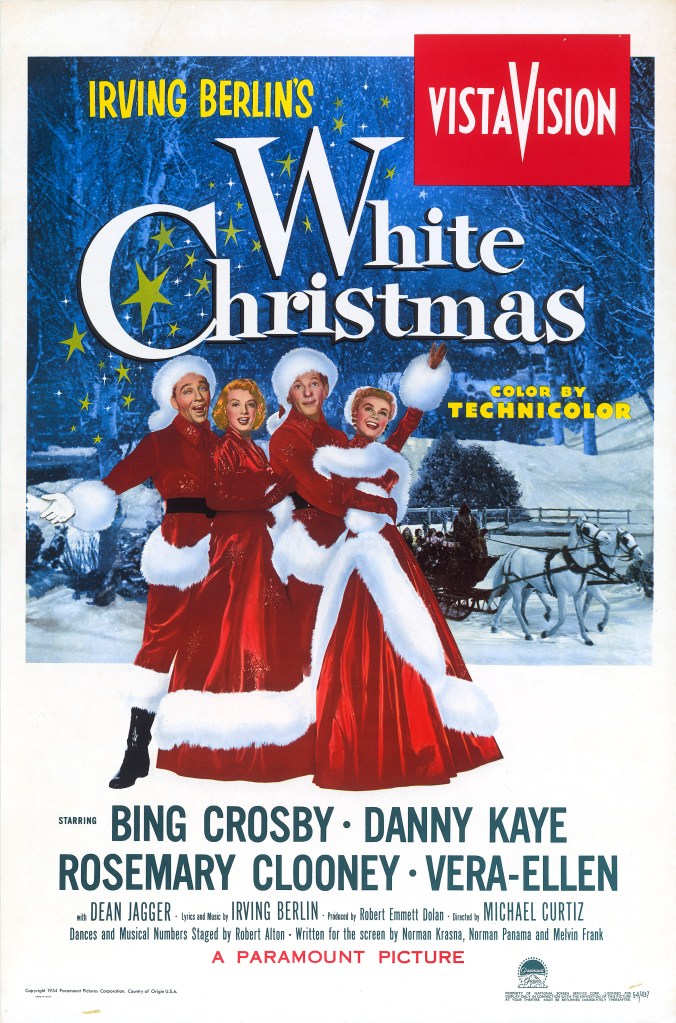
Holiday Vibes (7/10): So, the trench warfare couldn’t possibly feel less like the holidays. But I’m hard-pressed to identify a more powerfully evocative celebration of Christmas on film than the ways that music and prayer call these folks together across lines of nationality and hostility: if you want a reminder that, at least in some places and at some times, Christmas has genuinely called humans to remember that we ought to live at peace with one another, in defiance of a world that seeks to divide us, this movie hits it out of the park, and maintains a sense of optimism and brotherhood far longer than other approaches to the Christmas truces might have managed. No offense to Bing and Danny celebrating Christmas Eve in a war zone at the start of White Christmas, but this one is both more believable and more moving.
Actual Quality (8.5/10): Yes, it’s a sentimental film, and in trying to get its messages across, it plays fast and loose (to take but one example, I’m not clear as to how the majority of German and Scottish Protestants in their ranks would have participated as comfortably in a Latin mass as that scene suggests), but the moments of transcendence are genuinely captivating. The cast is talented, and the production’s setting is richly realized: we know they’re fighting through French farmland because we can see the remnants of a peacetime life around us everywhere, slowly being ground to dust by the machinery of war. As I mention in the review, as it goes on, I think it struggles a little to maintain momentum, since the peaks it hits mid-film are so high, but the overall effect is still successful: this is a good movie.
Party Mood-Setter? If you’re doing last minute Christmas wrapping, this is not your jam: even when it’s uplifting or light-hearted, it’s by no means a casual watch.
Plucked Heart Strings? I mean, I am absolutely tearful at the scene where Sprink is singing as he crosses to the Scottish soldiers, Christmas tree in hand. It’s gorgeous and hopeful and sad. If you’re watching this and you’re remotely engaging with it, I can’t help but feel you’ll be moved, emotionally.
Recommended Frequency: Even the best holiday war movie is still, of course, a war movie. I couldn’t watch this every year, and I wouldn’t plan to do so. I think I’ve seen it three times in the last decade and that feels about right to me: often enough that I remember its message, and not so often that it’s grown too stale or comfortable. It’s powerful any time of year, of course, so you wouldn’t have to rush to it, but if it didn’t make your list this December, I would certainly suggest you give it a try next year — in the right context and right frame of mind.
If you’re a Paramount+ subscriber — and this is, I think, the first time all December I’ve mentioned that platform — you’re in luck: this is your moment. For the rest of us, it looks like this film comes with some premium add-on subscriptions on some platforms, and is widely rentable as a streaming title. In fact, if you have access to a university library, check their streaming offerings: my own university has a streaming license for this movie via an academic film package we subscribe to. There may be a Blu-ray version, but I’m not sure it’s available for North America: we do definitely have a DVD version, though, which in these times of picket lines at Amazon facilities I am suggesting you acquire via Barnes & Noble (or your preferred disc retailer). And Worldcat knows of copies in at least 1,500 library systems: it’s well worth a look in your library catalog, then, if you’re interested in it but not enough to pay for it (which I understand).